

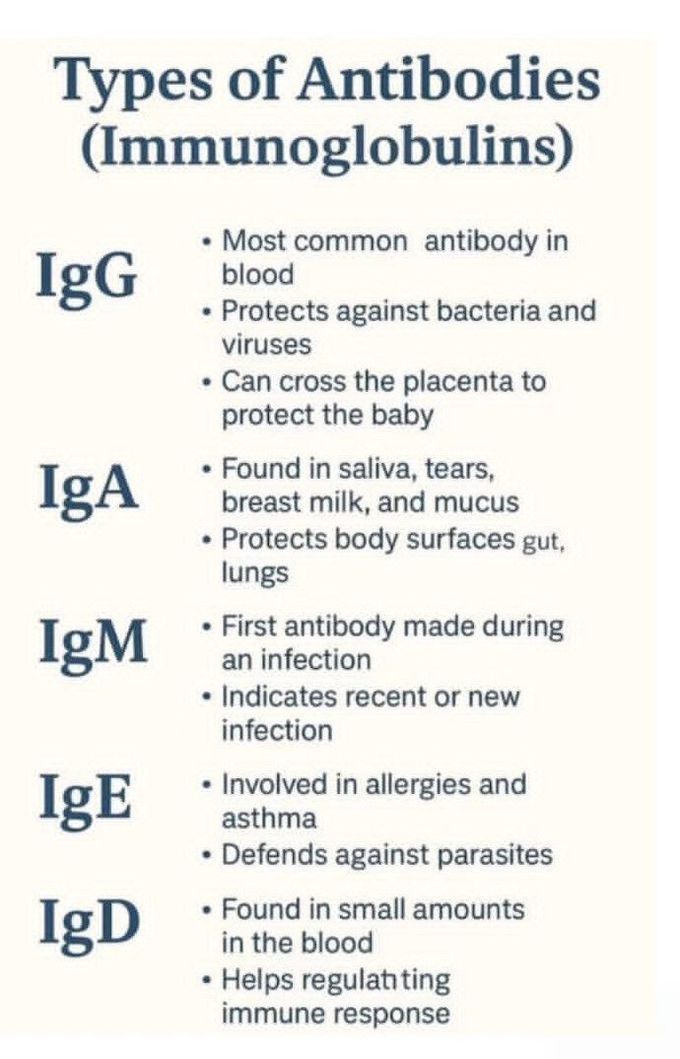
Types of Antibodies
There are five main types (isotypes) of antibodies: IgG, IgA, IgM, IgD, and IgE, each with unique structures and roles in the immune system, like IgG providing long-term immunity and IgA protecting mucosal surfaces, while IgM is the first responder and IgE triggers allergies. Here's a breakdown of each type: IgG (Immunoglobulin G): The most abundant antibody, found in blood and fluids, provides long-term immunity, crosses the placenta to protect newborns, and neutralizes toxins/viruses. IgM (Immunoglobulin M): The first antibody produced during an infection, found in blood/lymph, forms large complexes, and activates the complement system. IgA (Immunoglobulin A): Protects mucosal surfaces (gut, lungs, saliva, tears, breast milk) from inhaled/ingested pathogens. IgD (Immunoglobulin D): Found on B cell surfaces, its exact role is unclear, but it helps with B cell activation and maturation. IgE (Immunoglobulin E): Primarily involved in allergic reactions and fighting parasites, causing mast cells to release histamine. Antibodies: Definition, Types & Function - Cleveland Clinic IgG antibodies help protect your body from viral and bacterial infections. IgM.