

Dr Hammadalmost 7 years ago
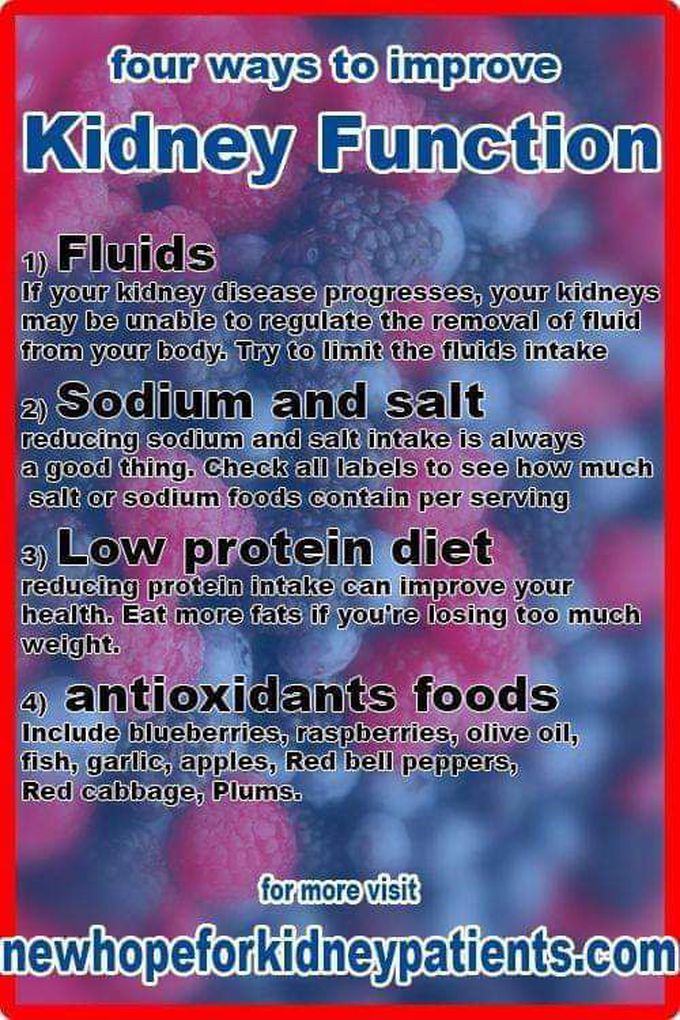
Maintaining Healthy Kidney Function:--- What can you do for your kidneys? 1. Keep fit and active. 2. Keep regular control of your blood sugar level. 3. Monitor your blood pressure. 4. Eat healthy and keep your weight in check. 5. Maintain a healthy fluid intake. ... 6. Do not smoke. 7. Do not take over-the-counter pills on a regular basis. • Your kidneys, two little bean-shaped organs, continually filter your blood for toxins, flushing out waste products along with excess water. They also help keep your electrolytes — including sodium, potassium, and magnesium — in balance and prevent your blood from becoming too acidic or too alkaline. • Blood continually circulates through them, over the course of a normal day, your kidneys filter about 45 gallons of blood. But wait, there’s more! The kidneys also function as endocrine organs, meaning they’re responsible for the production of a variety of hormones that affect blood pressure, red blood cell production, and bone health. Those little guys work hard for you! • The large arteries that feed your kidneys, known as the renal arteries, are critical to maintaining kidney health. That stands to reason because these arteries bring the kidneys blood to filter and provide life-sustaining oxygen and other nutrients. These arteries also have nerves that detect blood pressure and signal the kidneys if something seems amiss. • Each of your kidneys is home to about a million tiny complexes called nephrons. Each nephron is made up of an intricate series of capillaries (the smallest of blood vessels), along with a complicated structure known as a tubule. Ultimately, all the urine filtered by these microscopic nephrons converges into the ureter, which takes it out of the kidney and into the bladder. The urine then exits the body through the urethra. 10 Ways to Keep Kidneys Healthy ---- • Exercise regularly. • Don't overuse over-the-counter painkillers or NSAIDs. • Control weight. • Get an annual physical check up with Blood Sugar, Liver Function test, Kidney Function Test. • Follow a healthful diet. • Know your family's medical history. • Monitor blood pressure & cholesterol, Annual check up of Lipid Profile. • Learn about kidney disease. • Don't smoke or abuse alcohol.
Other commentsSign in to post comments. You don't have an account? Sign up now!