

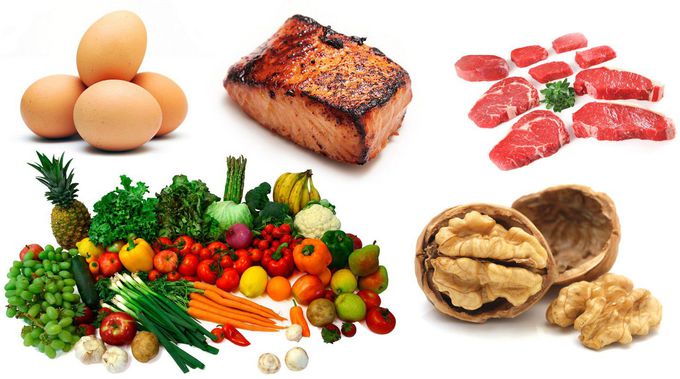
Types of diet
di·et [di´әt] [Gr. diaita way of living] the customary allowance of food and drink taken by any person from day to day, particularly one especially planned to meet specific requirements of the individual, and including or excluding certain items of food. ―di´etary adj absolute diet fasting. acid-ash diet a diet to produce acidification of the urine, consisting of meat, fish, eggs, and cereals, with little fruit and vegetables and no cheese or milk. adequate diet a diet that enables an animal to grow, mature, and reproduce in a normal manner. Cf. optimal d. alkali-ash diet a diet of fruit, vegetables, and milk with minimal meat, fish, eggs, and cereals, used to prevent some types of urinary calculi. Called also basic d. Atkins diet a diet low in carbohydrates; used for weight reduction. balanced diet a diet that contains all the nutritive factors in proper proportion for adequate nutrition. basal diet a diet that is just sufficient to meet the caloric requirements of basal metabolism. basic diet alkali-ash d. bland diet a diet that is free from any irritating or stimulating foods. challenge diet a diet to which foods suspected of causing sensitivity in the patient are added, usually one at a time, and the results assessed. Cf. provocative d. clear liquid diet a temporary diet of clear liquids without residue; it is not nutritionally adequate, and is used in some acute illnesses and infections, in the postoperative period (especially after gastrointestinal surgery), and to reduce fecal matter in the colon. DASH diet (Dietary Approach to Stop Hypertension) a diet high in fruits, vegetables, and low-fat dairy products; low in saturated and total fats; low in cholesterol; and high in fiber. Research studies support the hypothesis that this diet reduces blood pressure and may play a role in the prevention of high blood pressure. diabetic diet a diet designed to prevent complications of diabetes mellitus by controlling the timing and amount of energy intake and minimizing the occurrence of ketosis or hypoglycemia; fat, carbohydrate, and protein ratios and amounts are controlled but specific diet plans vary. elemental diet a diet consisting of a well-balanced, residue-free mixture of all essential and nonessential amino acids combined with simple sugars, electrolytes, trace elements, and vitamins. elimination diet a procedure to identify food allergy in which foods are sequentially omitted in order to detect the one or ones responsible for symptoms. Feingold diet a controversial diet for hyperactive children, which excludes artificial colors, artificial flavors, preservatives, and salicylates. formula diet a diet in which one or more meals consist of or are supplemented by a processed drink formulated to contain defined levels of specific vitamins, nutrients, and caloric level; it is usually used in weight reduction. full liquid diet a diet for patients who cannot eat solid food, consisting of any liquid such as milk or juice, as well as liquefied solids; this diet can be nutritionally adequate. Gerson diet a detoxification diet, claimed to be useful in the treatment of cancer, allergies, and a wide variety of degenerative diseases, consisting of large quantities of organically grown fruits and vegetables, consumed mainly in the form of juice; often combined with other complementary therapies. Giordano-Giovannetti diet a low protein diet given to alleviate gastrointestinal symptoms of chronic renal failure. gluten-free diet a diet deficient in the cereal protein gluten; used as a specific treatment for celiac disease (gluten enteropathy). Gonzalez diet an ovolactovegetarian diet with the addition of fish, used with pancreatic enzymes and other supplements and colonics; claimed to be effective against pancreatic cancer. gouty diet a diet for mitigation of gout, restricting nitrogenous, especially high-purine foods, and substituting dairy products, with prohibition of wines and liquors. Cf. low purine d. high calorie diet a diet that furnishes more calories than needed for the maintenance of weight, often more than 3500–4000 calories per day. Called also hypercaloric . .high fat diet ketogenic . high fiber diet a diet relatively high in dietary fibers, which decreases transit time through the intestine and relieves constipation. high protein diet a diet containing large amounts of protein, such as from meats, fish, milk, legumes, and nuts. hypercaloric diet high calorie . hypocaloric diet low calorie . ketogenic diet a diet that contains a large amount of fat with minimal amounts of protein and carbohydrate, in order to produce ketosis; called also high fat d. light diet a simple mixed diet suitable for convalescents. liquid diet a diet limited to the intake of liquids, sometimes with solids processed into a liquid state; low calorie diet a diet containing fewer calories than needed for the maintenance of weight, e.g., less than 1200 calories per day for an adult. Called also hypocaloric low fat diet a diet that contains limited amounts of fat. low oxalate diet a diet with no potatoes, beans, or fibrous vegetables, and no sweet fruit, tea, chocolate, or sweets; used for the prevention of oxalate calculi in the urinary tract. low protein diet a diet whose protein content is reduced below the daily needs of the body, prescribed for patients in chronic renal failure or end-stage renal disease in an effort to limit uremia. low purine diet a diet for mitigation of gout, omitting meat, fowl, and fish and substituting milk, eggs, cheese, and vegetable protein. low residue diet a diet that causes minimal fecal residue, limited to foods such as gelatin, sucrose, glucose, broth, hard-boiled egg, meat, liver, rice, and cottage cheese. low salt diet, low sodium diet a diet containing very little sodium chloride, sometimes prescribed for hypertension and for edematous states. macrobiotic diet a diet theory based on a Japanese variation of the yin/yang principle and popularized in the United States; there are several different diets, ranging from a severe form that includes only cereal products to more moderate ones in which a wide variety of foods are kept balanced between those with "yin" energy and those with "yang" energy. nutraceutical diet a diet containing functional foods (nutraceuticals). optimal diet a diet that produces the most desirable growth, the most successful reproduction, and the maintenance of the best possible health; cf. adequate Ornish diet a vegetarian diet containing 10 per cent of calories from fat and 5 mg cholesterol, used in combination with stress reduction techniques and moderate exercise for the prevention and treatment of cardiovascular disease. protein-sparing diet a diet that consists only of liquid proteins or liquid mixtures of proteins, vitamins, and minerals, and containing no more than 600 calories; it is designed to maintain a favorable nitrogen balance. provocative diet a diet designed to include the most common allergenic foods, from which they are eliminated one by one, as a means of determining the offending substances in cases of food allergy. Cf. challenge d. purine-free diet see low purine d. salt-free diet see low salt d. Schemm diet a low-sodium, neutral, and acid-ash diet for patients with congestive heart failure. Sippy diet a diet formerly widely used to treat peptic ulcers, consisting of milk, cream, and other supposedly bland foods; it was later proved ineffective. smooth diet a diet that avoids the use of foods containing roughage. subsistence diet a diet on which one can just live. Taylor diet a preparation of egg whites, olive oil, and sugar, given when the urine is to be tested for chlorides. test diet a diet designed to test allergy or sensitivity to certain foods by selectively omitting or including those foods, such as an elimination diet or provocative diet. therapeutic diet a diet specifically formulated for use in the diagnosis or treatment of disease or deficiency. very low calorie diet (VLCD) a diet providing 200 to 800 kilocalories per day, used for weight loss in markedly obese patients for whom other diet programs have been unsuccessful.