

Motor neuron disease
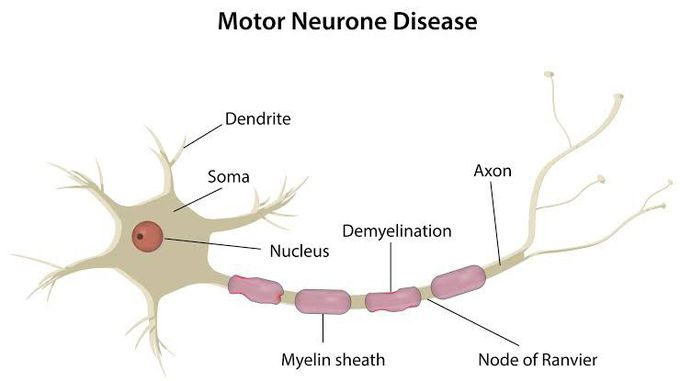
Motor neurone disease is a rare condition that progressively damages parts of the nervous system. This leads to muscle weakness, often with visible wasting. Motor neurone disease, also known as amyotrophic lateral sclerosis (ALS), occurs when specialist nerve cells in the brain and spinal cord called motor neurones stop working properly. This is known as neurodegeneration. Motor neurones control important muscle activity, such as: gripping walking speaking swallowing breathing As the condition progresses, people with motor neurone disease will find some or all of these activities increasingly difficult. Eventually, they may become impossible. It's not clear what causes motor neurones to stop working properly. In about 5% of cases there's a family history of either motor neurone disease or a related condition called frontotemporal dementia. This is known as familial motor neurone disease. In most of these cases, faulty genes have been identified as making a major contribution to the development of the condition. There's no single test to diagnose motor neurone disease and diagnosis is based mainly on the opinion of a brain and nervous system specialist (a neurologist). The diagnosis of motor neurone disease is usually clear to an experienced neurologist, but sometimes specialised tests are needed to rule out other conditions with similar features.